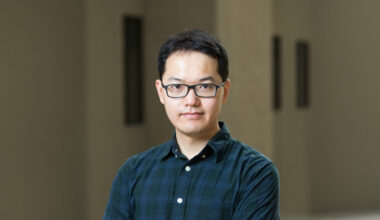
Dr. Troy McDiarmid grew up in rural Ontario watching people he loved change in ways nobody could explain. Multiple family members experienced dementia and psychiatric conditions within a short period of time.
“Everyone had different explanations, from genetics to environment and lifestyle, but no one really seemed to know what was going on,” he recalls. “I wanted to try and find out what went wrong in genetic disorders of the nervous system and find ways to help.”
He studied the brain during his undergrad, and completed a PhD in Neuroscience at UBC. After recently finishing a Banting Postdoctoral Fellowship at the University of Washington, he is now back at UBC as an Assistant Professor in UBC’s School of Biomedical Engineering (SBME) and a member of the Djavad Mowafaghian Centre for Brain Health (DMCBH).
“It’s a full circle moment and a dream come true,” he says.
Strengthening ties between neuroscience and bioengineering
Dr. McDiarmid was recruited to UBC in part to help bridge two rapidly advancing fields: fundamental neuroscience and technology development in bioengineering. He is developing cutting-edge tools to understand how the brain works at its most fundamental level, and how to fix it when things go wrong.
At UBC, Dr. McDiarmid’s joint appointment and the proximity of the DMCBH and SBME offer invaluable opportunities for collaboration. New technologies can move from development to testing in advanced models and ultimately toward clinical translation. This collaborative environment is also something he hopes to offer trainees in his lab.
“I’m looking for people who are curious, motivated and kind,” he says. “You don’t need to come in with all the technical skills—that’s what training is for. What matters is a willingness to learn, motivation to help, and a genuine interest in the work.”
Vital mentorship along the way
Dr. McDiarmid credits much of his development to the mentors who shaped his scientific approach. He points to his PhD supervisor, Dr. Catharine Rankin, and committee members Drs. Paul Pavlidis, Kota Mizumoto and Kurt Haas, each of whom instilled core principles—including focusing on asking the right questions, maintaining clarity of thought and persevering in the face of challenges (respectively).
He also reflects on the lasting influence of the late Dr. Don Moerman, a leader in C. elegans research.
“Don taught me the importance of building tools and technologies that benefit the whole community, which is central to my current work,” Dr. McDiarmid says. “He also carried himself in such an exemplary way, always humble, self-effacing and eager to help others. That left a huge impression on me.”
Turning cells into recording “black boxes”
The overarching goal of Dr. McDiarmid’s research program is to identify, manipulate and record gene regulatory elements across different brain cell types. At the core of his work is a powerful idea: what if cells could record their own history?
“Right now, a lot of biology relies on snapshots,” he explains. “You can either image a few channels in real time, or you can measure thousands of things at once, but you have to destroy the sample to do it. These imaging and profiling approaches are incredibly powerful, but so far, it’s been very hard to measure many different aspects of biology over long periods of time.”
His lab is helping to pioneer a new complementary approach called molecular recording, which transforms DNA into a kind of living storage system.
“The idea is to turn cells into their own black boxes, like a flight recorder on an airplane,” he says. “We can write biological events into DNA over time, and then read them out later with high-throughput sequencing to reconstruct what happened.”
Using advanced genome editing tools, his team can “write” information into DNA as sequences and over time, these sequences accumulate, creating a record of cellular activity.
This technology allows researchers to track complex biological processes, such as how the brain develops, how cells change over time, or how disease unfolds, at an unprecedented level of detail.
Building precision therapies for the brain
Alongside molecular recording, Dr. McDiarmid’s lab is also working on developing and applying single-cell CRISPR screening technologies to map and harness enhancers, which are short stretches of DNA that act like switches, controlling when and where genes are turned on. By identifying enhancers that are active in specific brain cell types, his team can design therapies that target only the cells affected by disease.
“For example, if a disorder is caused by dysfunction in neurons, you don’t want to accidentally change gene expression in the heart or other tissues,” he explains. “Enhancers give us that precision.”
This work is already moving toward real-world applications. Some of the enhancers and gene-targeting strategies developed through his research are contributing to emerging therapies for severe neurodevelopmental disorders. Looking ahead, Dr. McDiarmid sees even more dynamic possibilities, especially when combining different technologies.
“I can see potential for on-demand cell-based therapies that can respond to a cell’s history,” he says. “For example, if a cell records prolonged immune activation, it could trigger a therapeutic response only when needed.”
This kind of adaptive, responsive treatment could open the door to more personalized and effective approaches for conditions ranging from multiple sclerosis to genetic neurodevelopmental disorders.
“If we can build the tools we need to understand how gene regulation builds the brain during development, and how it remodels the brain throughout life, we’ll be better able to treat diverse genetic disorders of the nervous system,” he notes.
From the skatepark to the lab
As he builds his lab from the ground up, Dr. McDiarmid finds himself drawing on lessons from an unusual source: skateboarding.
“In high school, I wanted to be a professional skateboarder,” he recalls. “I competed, organized contests, events and even went on road trips to film videos—the whole nine yards.”
Today, Dr. McDiarmid is still drawn to the persistence and trial-and-error that skateboarding demands, but he’s applied that mindset to a different kind of challenge.
“It’s endlessly humbling,” he says. “It doesn’t matter how hard you’ve tried. Either you land the trick or you don’t.”
Science, he notes, can feel much the same. Experiments fail and progress can be slow, but when something finally works, the payoff is clear and rewarding.
Outside of the lab—when he’s not in the skatepark—he often recharges with time in nature, including hiking, camping and backcountry skiing. During his postdoc in Seattle, he used to commute by kayak, but now that he lives on campus, he can just walk to work.
For Dr. McDiarmid, the combination of UBC’s leading-edge scientific communities, forward-looking vision, and West Coast environment makes it the ideal place for him and his research team.
“We’re building tools that could fundamentally change how we study and treat the brain,” he says. “And we’re doing it in a place where those ideas can connect to real-world impact.”