The CanNRT Fellowship is a competitive program designed to support trainees in Canadian universities in the field of neurodevelopment. This three-year-long program offered financial support, immersive learning opportunities and mentorship to just 20 awardees across Canada this year.
 Alexandra Lawson, a MSc student in Neuroscience under the supervision of Dr. Jessica Rosin, was one of two graduate students at UBC to be selected for this award. We reached out to Alex to learn more about her and her research. From professional skiing to microglia, she had some fascinating things to share!
What is your educational background?
I am originally from the Eastern U.S. (Vermont). I completed my undergraduate degree in Neuroscience and Computer Science at Middlebury College. Not educational background but fun fact, following my undergraduate degree and prior to my Masters I spent 3 years as a professional Nordic Ski Racer!

Alex as a professional Nordic Ski Racer
The Rosin lab studies how distinct populations of immune cells communicate and influence development. At the Rosin lab, what is your thesis project on?

Microglia in the mouse hypothalamus
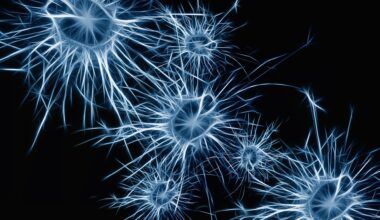
My thesis project investigates the impact of maternal stress on neurodevelopment. Specifically, I study how maternal stress influences microglial morphology, phagocytic behavior, and movement in the hypothalamus of the developing embryo. Microglia, often described as the “phagocytic immune cells of the brain,” have recently been shown to play a major role in shaping the neural environment, and they seem to do so in a regionally and sex specific manner. What’s equally fascinating is that their appearance (morphology) and movement can reveal a lot about what they’re doing.
To explore this, we use a variety of techniques including machine learning, flow cytometry, and live-cell imaging! Right now, we’re working on the final part of my thesis, which involves live imaging of the paraventricular nucleus of the hypothalamus to see how embryonic microglia move and interact in the embryonic neural environment in control and maternally stressed conditions. Getting to watch them in action has been incredibly exciting. It is incredible to see them in live action!
What are your future plans?
I want to go into medicine! I’m currently exploring MD/PhD programs as well as MD programs with strong research opportunities. I’ve always been drawn to clinical medicine, my masters at UBC has also shown me that I want to continue doing research, whether through a formal MD/PhD pathway or by pursuing research collaborations and additional training alongside an MD.
What do you like to do outside of research?
I love being outside and exploring. My favorite things are running and skiing. But recently I’ve been getting super into biking, biking over to West Van and exploring the hillside there is probably my favorite thing to do post lab.