In recent years, older adults across British Columbia have dialed up Zoom on their computers, their bright faces filling little boxes on Cynthia Friesen’s computer screen. As the facilitator of the BC Brain Wellness Program’s virtual singing class, Friesen leads individuals with chronic brain conditions, their care partners and healthy agers through vocal exercises and singing activities, fostering connection through sound.
The origin of the BC Brain Wellness Program
Dr. Silke Appel-Cresswell, Marg Meikle Professor in Parkinson’s disease at the Djavad Mowafaghian Centre for Brain Health and founder of the BC Brain Wellness Program, first connected with Friesen in an unexpected way — as the parent of one of her vocal students.
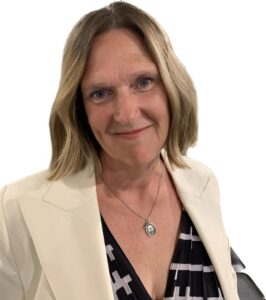 “She told me, ‘I think we really need an endeavour at the Centre for Brain Health to fill in the gap that so many people are left with after neurological diagnosis,’” Friesen recalls.
From there, the BC Brain Wellness Program (BCBWP) launched as a lifestyle intervention endeavour in the fall of 2019, and Friesen became the team lead for the BCBWP’s expression and creation programming. When the pandemic arrived six months later, the program moved online, bringing its suite of classes ranging from exercise to yoga, gardening to group singing into a virtual studio.
However, this shift to a virtual environment came with a frustrating limitation for musical engagement: audio delays made collective musicking nearly impossible, leaving participants muted while only Friesen’s voice carried through.
“I’m sitting in a room with these tiny boxes on the screen,” one participant reflected. “I can see mouths moving and people swaying but because I can’t hear them, I don’t particularly feel very connected to the group.”
So, what happens to the benefits of group singing when voices can no longer align? That’s the question Dr. Tara Gaertner, Cynthia Friesen, and their interdisciplinary team at UBC set out to answer in a recent study published in Music & Science, supported by the SingWell research initiative. Drawing on community programming like the BC Brain Wellness Program, they conducted a mixed-methods study to compare muted and synchronized singing experiences.
Voices in synchrony
Not all virtual group singing must be muted, thanks to an innovative platform called JackTrip that was specifically engineered for musicians, designed to minimize audio lag. By switching from Zoom to JackTrip sessions, researchers could directly compare the effects of muted and synchronized audio.
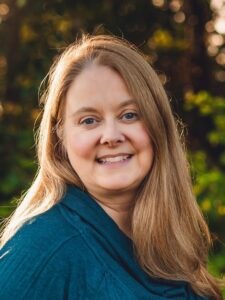 Dr. Tara Gaertner is a neuroscientist and psychiatrist-in-training in the Department of Psychiatry at UBC. As a lifelong musician, having taught music classes for over 20 years, she has spent her career, in her own words, “jumping between science and music. For her, a study on the neuroscience of singing was the perfect intersection of both worlds.
Research shows that while all forms of singing are beneficial, singing in synchrony with others leads to significantly greater improvements in social connection. So, what is it about hearing this “collective sound” that creates a deeper bond?
“If you think about tribal societies, they used drums and marching and moving together and dancing as part of their rituals to build that sense of community,” Dr. Gaertner explains. “We think that those same principles are wired in our brains, where when we move and make noises in synchrony, we increase that sense of bonding.”
“When they can hear one another, it’s that connectivity of being engaged in something collaboratively with other co-creators,” Friesen adds. “It’s that feeling of being part of something bigger than just yourself.”
Benefits of group singing extend beyond mood
In addition to increasing mood and feelings of social connection, online group singing decreased self-reported pain levels and salivary cortisol, which is an indication of stress. It seems that, beyond healing the mind, music might be healing the body too.
“Singing engages the body in different ways,” Dr. Gaertner explains. “When you sing, you are breathing more deeply, and that is going to activate the parasympathetic nervous system, helping the body relax. That’s one reason why cortisol levels decrease.”
She adds, “There is also an emotional component – singing makes people feel good. I think it’s this combination of the emotional and physical responses which helps us relax and be more present in the moment.”
Surprising benefits of muted audio
Researchers expected participants to enjoy the synchronous audio, where they could produce harmonies in unison. But they also anticipated hesitation — singing in front of others, after all, can feel vulnerable. What they didn’t expect was that the muted Zoom sessions could also cultivate their own unexpected form of togetherness, through something as simple as a hand gesture.
Friesen’s curriculum incorporates hand symbols tied to the shape of the mouth and the sounds it produces. On Zoom, where voices couldn’t be heard, participants gravitated to these gestures as a way of moving together.
“I had no idea that it would translate as a way of synchrony for them when they were muted,” she reflects. “That was really rewarding to see.”
Beyond the statistics
Perhaps the most telling measure of the study’s impact can’t be captured in cortisol levels or Likert scales. One participant had sung with the Threshold Choir, a group that brings song to people in palliative care. She joined the Singwell research study as a care partner for her husband, who lived with severe dementia. Although adjusting to the new technology and technical difficulties was frustrating for her, finally hearing everyone’s voices in synchrony was worth it – almost like a little indulgence.
Another participant, also a care partner, offered an image that has stayed with Friesen ever since.
“When the voices came together,” she said, “they flowed like a river.”
“I think of that image often,” Friesen reflects. “All these little tributaries — and when you come together, there’s this movement, this motion, and you just can’t stop that going-forward piece.”
In the end, that may be what the BC Brain Wellness Program’s virtual choral collective is really about: not just the science of singing, but the strong current it creates.
By Amy Wong