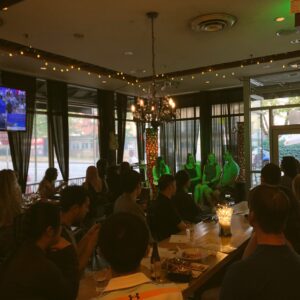
 On a clear summer evening in August, the air buzzed with excitement as guests bustled into The Charqui, a quaint neighborhood resto-bar, for the first of what would become a series of sold-out events. Hilarious comedians and brilliant scientists, including Dr. Annie Ciernia, took the stage in a night full of music, learning and fun.
Two weeks before her own wedding, Dr. Marissa Lithopoulos organized the very first “Science, Stand-up & Song” event in Vancouver. A stem cell scientist by day and a stand-up comedian and musician by night, Marissa is on a mission to make us all love science.
A scientist’s origin story
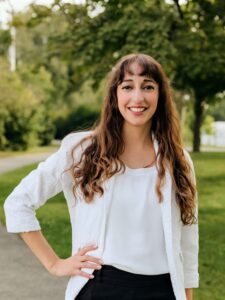 Marissa’s path to science was set in motion by a frightening moment in her childhood. When she was six years old, she had a severe infection which spread to her brain and nearly killed her.
“I knew, from that moment on, that I wanted to help save the lives of others,” she reflects. Initially, Marissa thought that she would become a clinician – until she got a taste of research.
Marissa completed her undergraduate honours thesis at the University of Ottawa under the supervision of Dr. Bernard Thébaud, a clinician-scientist at the Ottawa Hospital Research Institute. Excited by the research component of medicine, she knew that she wanted to be a part of cutting-edge research that could have a huge impact on the world.
The science of early development
Stem cells are special cells that can make more of themselves and become different cell types. They are key during neurodevelopment, where they function to make new brain cells for both the growing fetus and the developing child in early life. During her PhD at the University of Ottawa, Marissa and her team discovered that brain stem cells fail to fulfill this function in a model of preterm birth complications.
For her postdoctoral work at UBC, supervised by Dr. Freda Miller and Dr. David Kaplan, Marissa is investigating why this is the case. To do that, she examines individual brain stem cells to understand how signals from the brain shape their development. Ultimately, Marissa’s research mission is to develop therapies that can mitigate the complications of preterm birth. If successful, it could mean that babies born too soon have a better chance of healthy brain development — and a fuller life.
Science, comedy, and guitar
During graduate school, Marissa started singing and playing guitar to de-stress after a long day in the lab. During her postdoc, she became involved in comedy, meeting new people and fostering a sense of community. Over time, she noticed that these creative outlets were doing something unexpected — they were making her a better scientist.
“I firmly believe that research is a creative endeavour,” Marissa says. “There are certain lessons and skills that we can learn from artistic crafts that boost creativity in science.”
From comedy and music, she learned how to get her work “out there” for feedback while refraining from self-judgment.
“The goal isn’t to reach perfection, it’s to make progress,” she shares. “It’s also important not to take rejections personally. If no one laughs at a joke, I get curious about why and keep working at it.”
Learning how to express herself through songs and comedy routines has taught her how to tell a captivating story – a skill that is critical in science, where it is important to share results with other scientists and the public.
How “Science, Stand-Up & Song” was born
“Science is so important, yet it can often feel unapproachable,” Marissa reflects. “I kept asking myself, how can I help to make science accessible?”
She decided to combine her three passions into one show because one important thing underlies them all: storytelling. “Science, Stand-Up, & Song” combines science with art to engage with the audience and foster connection. Science then becomes not only approachable, but a welcoming space for everyone.
A community in the making
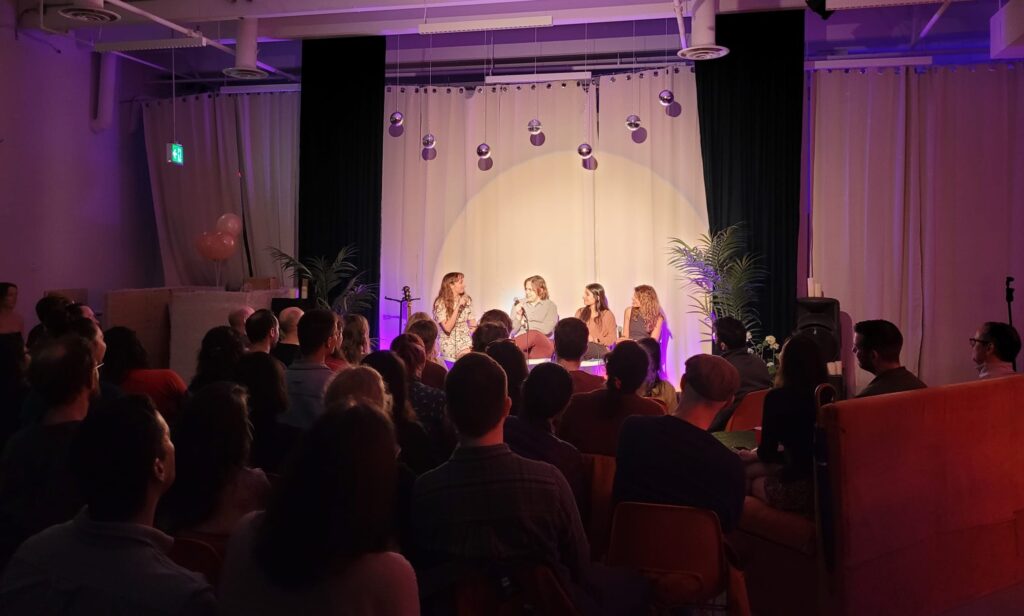
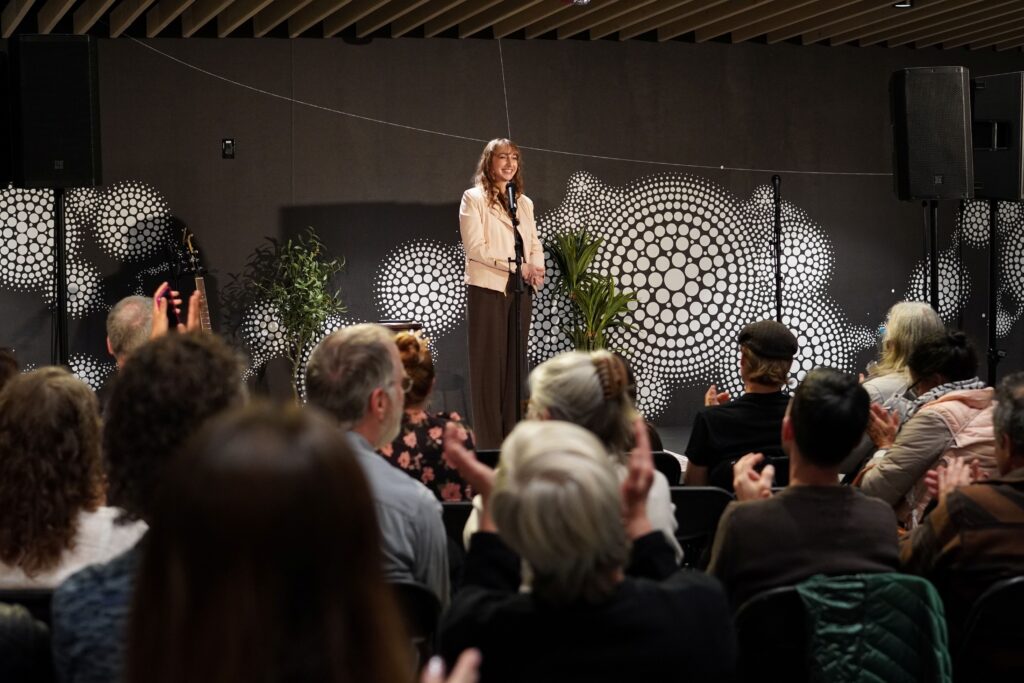
The impact of “Science, Stand-Up & Song” is perhaps best measured in the moments at the end of a show. At a recent event hosted by the UBC School of Biomedical Engineering, Marissa found herself chatting with audience members long after the last song had ended — listening to their stories, their favourite moments, their personal connections to the material and to each other.
“All the right pieces seemed to fall into place that night,” she recalls. With a lively crowd, a stem cell-themed panel, and her husband and father among the volunteers, it crystallized exactly what she had set out to build: a community where scientists and the public genuinely belong together.
That sense of belonging feels urgent right now. At a time of widespread mistrust in science, Marissa believes that human connection is part of the answer. By hearing scientists’ stories — their struggles, their curiosity, their humour — audiences begin to see science not as a distant institution, but as something alive and relatable.
“I hope that everyone can think of science as approachable, accessible and dare I say cool,” she says.
If the sold-out crowds are any indication, she’s well on her way.
By Amy Wong