On May 27–28, 2026, the UBC Core Facility for Neurology Biomarker Innovation (CFNBI), led by Dr. Cheryl Wellington, hosted its inaugural annual meeting. This interdisciplinary conference, themed “Fluid Biomarkers as Transformative Diagnosis, Prognosis, Management, and Monitoring Tools for Neurological Disorders,” brought together researchers, clinicians, trainees, industry partners, patient and lived-experience partners, and community members to explore the rapidly evolving field of fluid biomarkers in neurological disorders.
This event was designed to bridge public engagement and scientific exchange, beginning with a multidisciplinary panel discussion followed by a full-day scientific symposium. Overall, the event engaged over 200 participants and emphasized the potential of biomarkers to improve diagnosis, prognosis and management of neurological diseases.
Day 1: Community-Focused Panel Discussions
The conference opened with a community-focused event at the Djavad Mowafaghian Centre for Brain Health (DMCBH), beginning with a blessing from Elder Glida. Attended by approximately 100 participants, this session aimed to make cutting-edge neuroscience accessible to a broader audience and featured two interactive panel discussions on the application of fluid biomarkers:
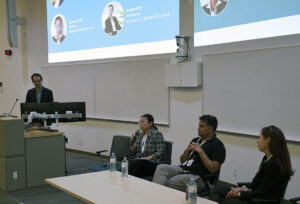
- Critical care, including brain injury and intensive care monitoring. This panel was moderated by Jordan Bird (PhD candidate in the Sekhon lab), and speakers Dr. Mypinder Sekhon and Dr. Dorothée Goulet highlighted advances in neurocritical care monitoring and prognostication, while Carmen Choi contributed patient perspectives.
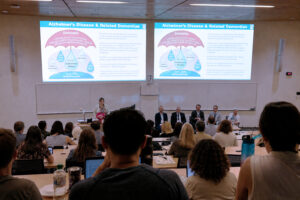
- Alzheimer’s disease and dementia, with an emphasis on early detection and management. This panel was moderated by Dr. Jennifer Cooper (postdoctoral fellow in the Wellington lab), and speakers Dr. Haakon Nygaard, Dr. Eric Smith and Dr. Howard Chertkow discussed Canada’s position in adopting blood-based biomarkers for Alzheimer’s diagnosis. Carol Keen and Mark Breslaw provided lived-experience perspectives, one as a caregiver, and the other as an individual living with young-onset Alzheimer’s disease, respectively.
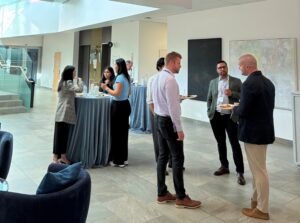
The panels concluded with an evening networking reception, which created an inclusive environment that fostered dialogue between researchers and the public. This segment proved particularly valuable for building cross-disciplinary connections and enabling informal discussions that extended beyond structured programming.
Day 2: Scientific Symposium
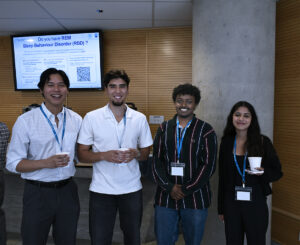
The second day was held at the Vancouver General Hospital and began with a blessing from Elder Alvin. The symposium focused on scientific presentation and interdisciplinary collaboration, with approximately 170 participants.
After opening remarks from Dr. Wellington and CFNBI Research Director Dr. Sophie Stukas, the keynote lecture was delivered by Dr. Nicholas Ashton, Senior Director of the Fluid Biomarker Program at Banner Health. Dr. Ashton’s presentation highlighted recent advances in biomarker sensitivity and specificity, the growing feasibility of blood-based diagnostics in both research and clinical settings, and the implications of these tools for transforming patient care.
The symposium was comprised of three major scientific themes:
- Dementia and Alzheimer’s Disease: These presentations underscored the growing role of blood-based biomarkers in enabling earlier and more accurate diagnosis of dementia. Presentations included:
- Validation and Discovery of Plasma Biomarkers for Dementia in an Autopsy Cohort – Dr. Jennifer Cooper (UBC)
- Expanding the Biomarker Portfolio of the Consortium for the Early Identification of Alzheimer’s Disease–Quebec: Integrating AD Pathology, Metabolic Dysfunction, and Nutritional Markers – Dr. Frédéric Calon (Université Laval)
- Challenges in the Interpretation of Alzheimer’s Disease Biomarkers in Clinical Practice – Dr. Pedro Rosa-Neto (McGill University, UT Southwestern)
- Living with Younger-Onset Alzheimer’s: A First-Person Perspective – Mark Breslaw, who provided a powerful firsthand account of living with young-onset Alzheimer’s disease.
 Neurotrauma and Brain Injury: These presentations highlighted the importance of integrating clinical, molecular and imaging data in neurotrauma personal care. Presentations included:
- Plasma Proteomic Profile of Youth Sports-Related Concussion – Kidus Achalu (PhD student in the Wellington lab, UBC)
- From Symptoms to Signals: Blood Biomarkers and the Evolution Toward Precision Concussion and TBI Care – Dr. Roger Zemek (CHEO Research Institute)
- Analytical Validation of Biomarkers in TBI to Promote Clinical Implementation of TBI Biomarkers: Updates from the INFORM Initiative – Dr. Ava Puccio (University of Pittsburgh)
- Imaging and Molecular Biomarkers of Trauma-Related Neurodegeneration – Dr. Ramon Diaz-Arrastia (University of Pennsylvania)
- Life After Brain Injury: A Shared Recovery Story from Son and Father – Michael & Bob Coss, who provided a compelling account of resilience and long-term recovery following severe traumatic brain injury.
- Innovation, Translation, and Implementation: These presentations emphasized that scientific advances must be accompanied by appropriate infrastructure, policy and clinical workflows to achieve meaningful real-world impact.
- Advancing Biomarkers of Therapeutic Response in Huntington Disease – Dr. Nick Caron (UBC)
- Implementing Plasma Biomarkers in Clinical Workflows: Practical Considerations – Olga Sandoval-Boczkowska (research assistant in the DeMarco lab, UBC)
- Pathways to Clinical Implementation of Biomarkers in British Columbia– Dr. Michael Chen (UBC)
- Words of Wisdom – Dr. Michael Hayden (UBC)
Key Observations and Impact
The conference successfully brought together a diverse range of stakeholders, including clinicians, basic scientists, trainees, industry representatives, foundation members and patient partners. This interdisciplinary environment reflects the complexity of neurological disorders and the need for collaborative solutions.
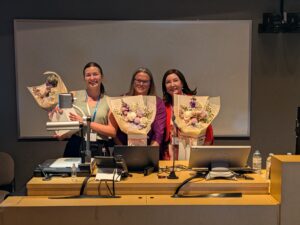
The event also prioritized inclusive engagement by removing financial barriers to participation through free attendance and by bringing together diverse perspectives. This approach supported broad participation and representation across disciplines and lived experiences.
In addition, the inclusion of patient speakers and lived-experience narratives reinforced the importance of aligning research priorities with patient needs. This approach strengthens both the relevance and ethical grounding of biomarker research.
Across sessions, fluid biomarkers—particularly blood-based tests—were consistently highlighted as transformative tools with the potential to reshape neurological care. Key benefits include earlier diagnosis, improved prognostic accuracy and monitoring of disease progression and treatment response.
A central strength of the meeting was its focus on translation. Presentations consistently highlighted the gap between research discovery and clinical implementation, while also proposing practical solutions to support integration into healthcare systems.
Following the conference, feedback survey responses were highly positive. Attendees identified the lived-experience presentations as their favorite component, followed closely by the keynote lecture. Many participants also praised the organization of the event and the energy of the CFNBI team.
The UBC-CFNBI 2026 Annual Meeting marked a significant milestone as the facility’s first interdisciplinary conference. By integrating public engagement with high level scientific exchange, the meeting demonstrated the growing importance of fluid biomarkers in neurology.
Building on this success, CFNBI is well positioned to continue advancing interdisciplinary collaboration and accelerating the translation of biomarker research in future annual meetings.
Acknowledgements
The conference was made possible through the generous support of its sponsors, including:
- Platinum sponsors: Eli Lilly, New Amsterdam Pharma
- Gold sponsors: UBC Department of Pathology and Laboratory Medicine, BrightFocus Foundation, Alamar Biosciences, Phoenix Airmid Biomedical
- Silver sponsors: Illumina, VGH & UBC Hospital Foundation
Additionally, this conference was supported in part by the Brain Canada Foundation through a Platform Support Grant, as well as Michael Smith Health Research BC, the CLEAR Foundation, the DMCBH and the Cowell Foundation.
CFNBI gratefully acknowledges this funding, which enabled interdisciplinary collaboration and supported knowledge translation across research, clinical and community settings.
Special thanks to: Tessa Morelli, Andrew Agbay, Isabella DiBerardino, Rachael Smith, Dana Go, Jennifer Cooper, Andrii Vislovukh and Sophie Stukas, and the entire team of staff and trainee volunteers for their hard work and dedication.