When Dr. Daniela Palombo, an Associate Professor in UBC’s Department of Psychology and a member of the Djavad Mowafaghian Centre for Brain Health, isn’t making strides in memory research, she’s finding new ways to connect with her kids. Recently, she had the chance to binge the two Inside Out movies and decided to share her insights with us.
The original Inside Out follows 11-year-old Riley as her personified emotions guide her through a move to San Francisco. In Inside Out 2, Riley is 13 and grappling with puberty, friendship changes and an expanding range of emotions.
Inside the Brain’s Headquarters (The Prefrontal Cortex)

In the movies, Riley’s emotions work out of “Headquarters,” a sleek central control hub. Is there a real-life equivalent?
“If there is a headquarters in the brain, it likely involves the prefrontal cortex,” says Dr. Palombo. “This area of the brain is thought to help us regulate our emotions in response to real events or even imagined ones.”
Although our brains don’t have a glowing control panel, the prefrontal cortex does work with a distributed network or “superhighway” of brain regions to help coordinate how we respond to the world. For example, the prefrontal cortex can help us reframe a negative experience to be less intense, or even positive.
How Emotions Work Together
From Joy and Sadness to Anxiety and Embarrassment, the emotions typically get along and cooperate (but sometimes squabble) to coordinate Riley’s responses to the world.
“Generally, emotions work together, ebbing and flowing within an experience,” Dr. Palombo explains. “The prefrontal cortex is probably involved in helping us transition from one emotional state to the next.”
Of course, it doesn’t always feel like teamwork. During mood swings or stressful moments, emotions can seem like they’re battling for control. Before a big soccer match, for example, you might bounce from excitement to fear of losing, and then back to excitement again, as if our emotions are “duking it out” for top prize.
“This is just our brains ‘pre-playing’ all the possible outcomes to an experience to best prepare us for what is to come,” Dr. Palombo explains. “It can feel really confusing, especially when you are young and your emotion regulation skills are not yet fine-tuned.”
While emotions can sometimes be characterized as competing, Dr. Palombo emphasizes that they are likely a means to an end – teaching us more about the world we live in.
Emotionally Coloured Memories
In the movies, memories appear as glowing orbs: yellow for joy, red for anger, green for disgust, blue for sadness. It’s a simple visual, but it captures something real about how our brains store the past.
“Though simplistic, I do believe it is useful to think of memories as coloured or ‘tagged’ with emotionality,” Dr. Palombo says. “We attach emotion to the memory itself, so when we relive it, we not only relive the who, what, where and when but also the emotional context – how we felt at the time.”
Research shows that emotional memories are more vivid and long-lasting than their non-emotional counterparts, for better or for worse. And just like in the movies, the “colour” of our memories can change over time.

“When we relive a memory, we can retroactively change the emotionality of that experience,” Dr. Palombo explains. “A memory can be ‘edited’ with the new emotions infused into it.”
Indeed, there is a powerful scene where Sadness touches an old memory, tinting the once-golden orb with blue and creating the more complex emotion of melancholy. In therapy, this same malleability can help people process painful memories in ways that soften their impact. Conversely, thinking of a happy memory can also help improve mood.
Can memories actually be replayed like video recordings?
The movies depict memories as crystal-clear recordings, stored neatly and played back on command. The events of Riley’s day are automatically encoded into glowing orbs, which are organized on shelves in the long-term storage library. When Riley needs to recall her memories, they are retrieved and sent directly back to Headquarters, intact and unchanged. It’s a tempting analogy, but a misleading one.

“This idea is very sticky, but it is not accurate,” Dr. Palombo clarifies. “Some memories can certainly feel like a video playback, but in reality, they are reconstructed each time we recall them.”
Indeed, research suggests that rather than being stored as individual, untarnished units, memories are actually scattered across the brain.
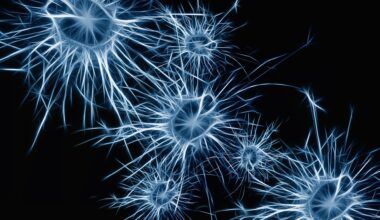
“Visual, auditory and emotional components are stored in highly connected networks of neurons across brain regions,” Dr. Palombo explains. “For example, the hippocampus can be best thought of as an indexer, pointing to the details of a memory stored in distributed parts of the cortex that get woven together when we recall an event.”
When we remember, we piece together these components to see, hear and feel an experience. However, this reconstruction is influenced by what we know and believe, so our memories can be reinterpreted and change over time. Dr. Palombo’s research shows that even highly emotional memories can change over a matter of months. Memory researchers are still working out which parts “stick” and which change, but the central theme usually stays stable while background details fall away. For example, when a younger Riley tastes broccoli, she’s more likely to remember the unpleasant flavour than the pattern on her dad’s shirt.
Forgetting memories
 As memories age in Inside Out, they fade and lose colour, eventually being sucked up by the Forgetters and sent to the Memory Dump. There, they are discarded and crumble away, becoming permanently forgotten.
Memories can fade and even seemingly disappear over time. However, there is much debate about how memories are forgotten. Is there a real equivalent of the Forgetters which delete memories from our brains entirely? Or do we continue to store our memories, but lose access to them over time? Dr. Palombo offers some thoughts:
- Winner takes all: Memories can be rewritten with new information, creating new novel pathways in the brain that compete with the old ones. Occasionally, specific cues can reactivate the old memory pathways, but the new one is often stronger and wins out.
- Lacking the cues: Sometimes, our memories feel “forgotten” because we lack the right retrieval cues. Visiting your old childhood home might unearth memories that you haven’t thought about for some time. For example, a whiff of an old perfume bottle can suddenly bring back memories of your first high-school dance.
- Memory interference: Memories can become mixed up, especially when they are similar, making some harder to access.
Forgetting is a complex process, involving many factors. Rather than a flawed system, forgetting inconsequential information is a sign of an efficient and adaptive one, allowing us to make inferences and engage in imagination.
Islands of Personality
Inside Out imagines identity as a set of “islands” built from core memories—Hockey Island, Family Island, Friendship Island. It’s a whimsical idea, but it nicely highlights how closely memory and identity are linked.

“Memory plays a critical role in identity,” Dr. Palombo says. “Our views and beliefs about ourselves or the world are influenced by what we remember about the past.”
Her collaborator, Dr. Christopher Madan, puts it simply: “Experiences in the present shape who people are in the future.”
In other words, the things that happen to us become memories that help shape who we are. But the movie only shows half of the picture. The process also works in reverse: our beliefs about ourselves affect which experiences stick in the first place. If you already think you’re bad at math, you might remember every failed quiz and forget the small wins.
And while Inside Out treats core memories as the pillars of identity, real-life identity is built from far more than a handful of defining moments. Our personalities are likely shaped by many experiences layered together over the years, not just a few single, glowing orbs.
“Broadly, the movie does a nice job of reminding us that memories are not just a vehicle for reminiscing about our past,” Dr. Palombo says. “Memories are a tool for making decisions, problem-solving and planning the future. More importantly, memories help us understand ourselves and the world around us.”
—
Dr. Palombo would like to acknowledge Kameron Kivi, a grade 9 student who worked in her lab this past summer as part of the seed2STEM research program for Indigenous youth. As part of his time in her lab, Kameron watched both movies and considered the science of memory behind the films! Dr. Palombo would also like to acknowledge Drs. Lila Davachi and Regina Lapate, as well as PhD Candidate Chantelle Cocquyt and undergraduate Kaity St. Cyr, for providing constructive feedback. Photo credits: Pixar.
By Amy Wong