
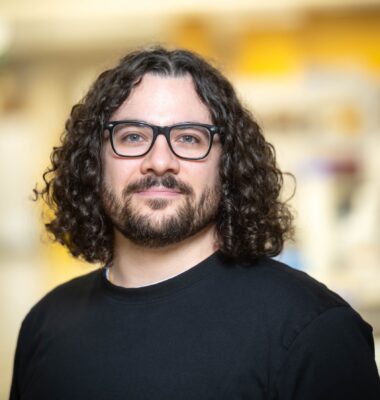
Milan Valyear
PhD (Concordia University), MSc (Wilfrid Laurier University), BSc (Wilfrid Laurier University)
Assistant Professor, Department of Psychology, Faculty of Arts, UBC
Full Member
Dr. Valyear is an Assistant Professor in the Department of Psychology and a member of the Djavad Mowafaghian Centre for Brain Health at the University of British Columbia. His research program leverages optical neuroscience tools to reveal the cells, circuits, and regional dynamics that serve to reinforce and disengage behaviour – this program aims to inform the development of efficacious treatments for addiction. Dr. Valyear received a BSc and MSc in Psychology from Wilfrid Laurier University before completing a PhD in Psychology in the Centre for Studies in Behavioral Neurobiology at Concordia University. He then completed postdoctoral fellowships at McGill and Boston University.
Contact Info
2211 Wesbrook Mall
Vancouver, BC Canada V6T 1Z3
Research Information
Psychopathologies are often mischaracterized as engagement in problematic behaviour but many behaviours, like food and alcohol consumption, are not inherently pathological – it is a failure to disengage that renders these behaviours pathological. Dr. Valyear’s lab investigates neural substrates that subserve the reinforcement and disengagement of behaviour to understand, and ultimately normalize, neural dysfunction underlying psychopathologies characterized by a failure to disengage behaviour, like binge eating and alcohol use disorder. Decades of clinical and preclinical work implicate the dopamine system in pathological food and alcohol consumption. What is often overlooked, however, is that dopamine neurons have distinct striatal innervation patterns and contributions to behaviour. Further complicating this picture is that dopaminergic and glutamatergic inputs to the striatum interact to shape the activity of downstream neurons. Dr. Valyear’s lab uses cutting-edge optical neuroscience tools to dissect the contributions of inputs to striatal physiology and link these substrates to fundamental psychological processes, like reinforcement and disengagement.