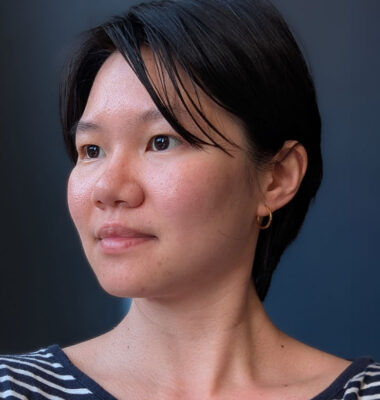
Hao-Ting Wang
PhD (University of York, UK), MRes (University of York, UK), BSc (National Chengchi University, Taiwan)
Assistant Professor, Department of Psychiatry, Faculty of Medicine, UBC
Full Member
Dr. Hao-Ting Wang is an incoming tenure-track Assistant Professor in Data Science at the Department of Psychiatry, University of British Columbia, starting in May 2026. Dr. Wang completed her PhD in Cognitive Neuroscience at the University of York under the supervision of Professors Jonathan Smallwood and Elizabeth Jefferies, where she developed foundational work on the neural basis of ongoing thought. She subsequently held research fellowships at the University of York, the Sackler Centre for Consciousness Science at the University of Sussex, and the Centre de recherche de l’Institut universitaire de gériatrie de Montréal (CRIUGM), where she worked with Professor Lune Bellec on neuroimaging software and neurodegenerative biomarker discovery. Her research sits at the intersection of cognitive neuroscience, machine learning, and transdiagnostic psychiatry. She is a core developer of Nilearn, a widely used open-source Python library for machine learning in human neuroimaging, and was awarded the 2023 Neuro–Irv and Helga Cooper Open Science Prize in recognition of her contributions to reproducible neuroimaging science.
Contact Info
Research Information
How does the brain support the rich, context-dependent cognition of everyday life, and what does it reveal about psychiatric vulnerability? My research addresses this question through two approaches: decoding brain function during naturalistic experiences and data-driven population neuroscience. Naturalistic stimuli, such as films, video games, and everyday tasks, engage the brain as it operates in the real world, capturing the continuous cognition that controlled laboratory tasks deliberately suppress. Pairing these paradigms with experience sampling allows me to anchor brain activity to what people are actually thinking and feeling in the moment. Rather than treating psychiatric conditions as categorically distinct, I seek shared neurocognitive mechanisms in naturalistic contexts that cut across diagnostic boundaries and examine their relevance at population scale. A core principle of my research is open and reproducible science. Verifiable and reusable findings are crucial for clinical translation. I develop brain decoding approaches to evaluate and interpret fMRI-based AI models, improving their prediction of clinically relevant outcomes. I work with large open neuroimaging datasets spanning general and clinical populations, building benchmarks and evaluation frameworks the community can use.
PublicationsKeywords
- fMRI
- cognitive neuroscience
- transdiagnostic psychiatry
- neuroinformatics
- machine learning